
MONTHLY CHALLENGES
STEP OUTSIDE YOUR COMFORT ZONE WITH
How better to learn about polymer clay and dive deep into unexplored waters than with a creative challenge? Exclusively for our members, each month we create unique pieces of art that celebrate carefully selected themes.


CHALLENGE OF THE MONTH | SEPTEMBER
SPARK OF INNOVATION
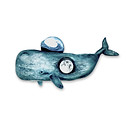
Within September, we invite you to think outside the box. What innovative ideas can be created with polymer clay? Which materials can you mix together? What has yet to be discovered? The Spark of Innovation is also the theme of this year’s Polymer Week Awards, giving you a chance to take part, win extraordinary prizes, and showcase your art to a worldwide audience.

DEADLINE | SEPTEMBER 30, 2026
CHALLENGE OF THE MONTH | OCTOBER
THE MAGIC OF CZEXTRUDER
This autumn is all about exploring the hidden possibilities of the extruder, a tool that allows you to create different shapes and strings of clay that would be quite impossible to create manually, connect them into canes, decorate surfaces, create interesting textures, and so much more.
Within this challenge, we would love to encourage you to experiment and see how far you can take the extruder. Try something that perhaps hasn’t been done before, explore interesting techniques that are already known, and combine them in your own way.
DEADLINE | OCTOBER 31, 2026


PREVIOUS CHALLENGES
A GLIMPSE INTO OUR
CHALLENGE OF THE MONTH | AUGUST
GLOSSY & SHINY
It was time to meet again with our fellow members and explore the entries from our August Challenge, where the focus was on everything glossy and shiny. What a fantastic experience we had together! There were 19 different entries, each exploring a unique approach to bringing shine and sparkle to polymer clay. From different materials and surface treatments to completely unexpected ideas, there was so much inspiration to discover!


CHALLENGE OF THE MONTH | JULY
THE CIRCUS IS IN TOWN
In July, we stepped into the playful world of the circus! From acrobats, clowns, and performers to vintage carousels, tents, and magical spectacles, we let the excitement and imagination of the circus inspire us, resulting in so many fantastic pieces, often featuring movable or rotating elements that brought even more playfulness to the designs.


CHALLENGE OF THE MONTH | JUNE
THE ART OF CRACKLE
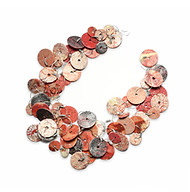
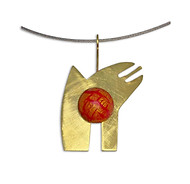
Crackle patterns can hide layers, create contrast, and bring a sense of age, movement, and unexpected beauty to polymer clay. There are countless ways to create crackle patterns in polymer clay, and throughout this challenge we explored exciting approaches using colour, mixed media, surface treatments, and a wide variety of techniques.
The result was a collection of incredible entries where cracks, lines, and broken patterns became intentional and expressive design elements.



CHALLENGE OF THE MONTH | MAY
FINISH WHAT YOU STARTED
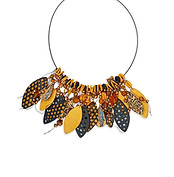
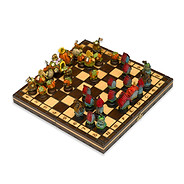
We all have unfinished pieces waiting somewhere in our studio, hidden away in a drawer of projects we once set aside, thinking we would return to them one day.
This challenge invited our members to revisit those forgotten treasures, gather polymer clay elements, leftovers, test pieces, and incomplete designs, and bring them back to life by finally finishing what had remained unfinished.



MYSTERY BOX
CHALLENGE OF THE MONTH | APRIL
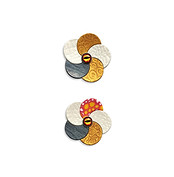
Together with the physical mystery box we prepared in collaboration with the FIMO team, we invited our members to step outside their comfort zones. Using seven products and different shades of polymer clay, the challenge explored one simple question: what kind of art can be created with only a minimal selection of tools and materials?
This experience encouraged participants to think differently, embrace limitations, and discover new approaches to working with our favourite medium, all while drawing inspiration from the blooming atmosphere of spring around us.



LESSON IN CHEMISTRY
CHALLENGE OF THE MONTH | MARCH
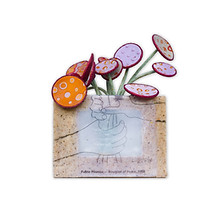
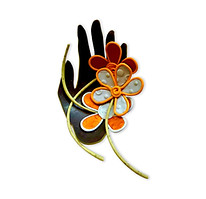
In March, we explored the unexplored. Which mediums and materials can be combined with polymer clay that we haven’t tried yet? What effects appear when clay meets salt, baking soda, alcohol, powders, and other substances?
These were the questions that opened up this challenge. Through experimenting, testing, making samples, and observing unexpected reactions, many participants discovered new techniques and directions.


FAUX MATERIALS
CHALLENGE OF THE MONTH | FEBRUARY
Another marvelous challenge is behind us, and this time we dived into the interpretations of faux materials created from polymer clay.
From different types of stones and structures found in nature to metal, wood, transparent elements, ceramic, and more — all of these were beautifully translated into polymer clay by our members and incorporated into wonderful pieces of jewelry and sculptures.


CHALLENGE OF THE MONTH | JANUARY 2025
SPHERICAL FORMS
A simple shape that can take on many forms. The first challenge of the year encouraged our members to work with spheres, whether as sculptures, round beads, three dimensional objects, or constructed compositions.
The possibilities were wide open, and we received incredible entries in which each artist embraced the idea in their own unique way.


ONE COLOR ONLY
CHALLENGE OF THE MONTH | DECEMBER 2025
In our December challenge, the final one of the year, we introduced a playful limitation. We invited our members to choose just one color of clay and create the entire piece using only that shade. No palettes, no mixing, no switching halfway through.
Expression came through three dimensional modeled shapes, textures, and details. We were honestly amazed by the results, especially how many pieces explored surface finishes and the contrast between matte and shiny, smooth and textured.


